






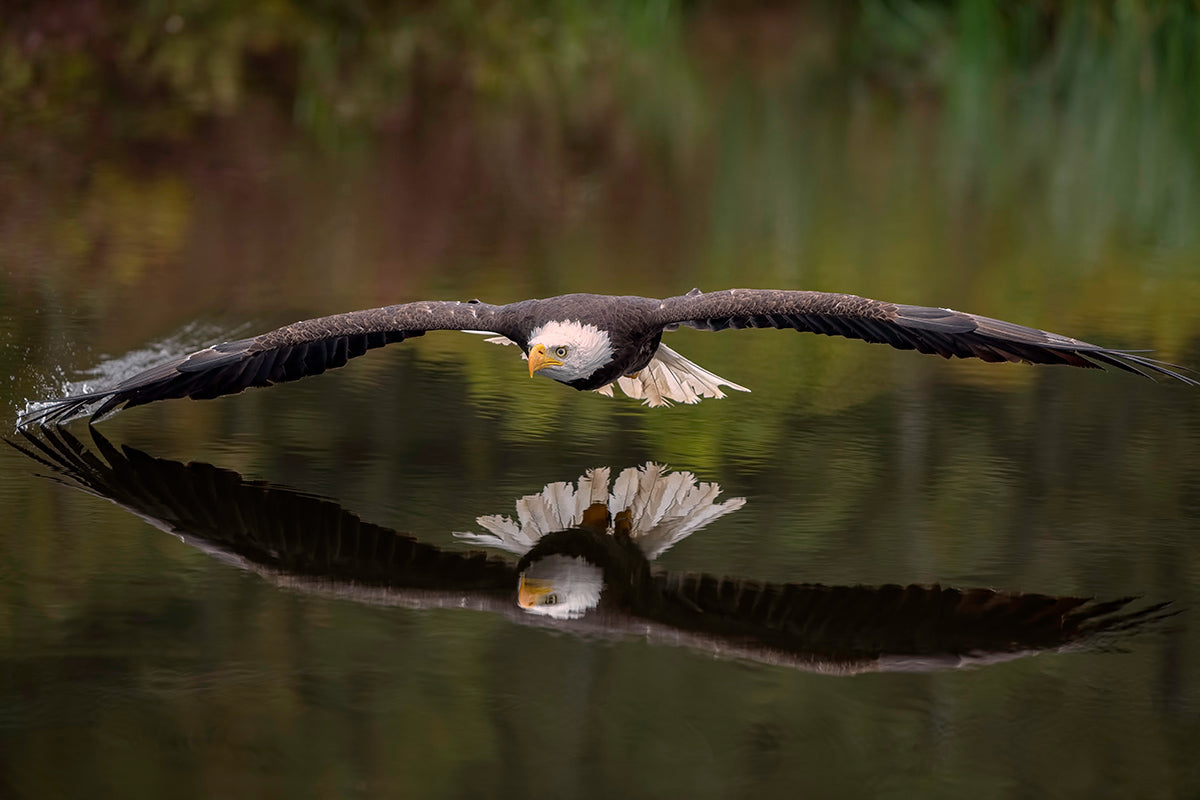
Each autumn, as cool northern air drifts down the Mississippi Flyway, one of America’s greatest wildlife spectacles quietly unfolds above Arkansas’s lakes and rivers. The Bald Eagle, long a symbol of strength and freedom, begins its seasonal migration south — and the Natural State becomes one of the best places in the nation to witness these magnificent raptors up close.
The Return of the Eagle
There was a time when bald eagles were nearly absent from Arkansas skies. In the mid-20th century, pesticide use and habitat loss devastated their populations nationwide. But thanks to decades of conservation work and the banning of DDT, bald eagles have made an extraordinary comeback.
Today, more than 150 nesting pairs live year-round in Arkansas, and each fall thousands more migrate in from the northern United States and Canada to spend the winter here. Between October and February, eagle sightings surge across the state. Of course Bald Eagles can be found in many states of the USA. Want to know more about these raptors? Go to the U.S. Fish and Wildlife Service Eagle Management Library.
Whether perched stoically along riverbanks, soaring over frozen reservoirs, or fishing in the open waters of Beaver Lake, Holla Bend, or Bald Knob National Wildlife Refuge, the sight of a bald eagle is unforgettable — a reminder of both nature’s fragility and resilience.
Where to See Bald Eagles in Arkansas

Arkansas offers exceptional vantage points for eagle watchers:
-
Beaver Lake (Northwest Arkansas): Known for its deep, clear waters and abundant fish. Winter boat tours often feature bald eagle sightings.
-
Holla Bend National Wildlife Refuge (near Dardanelle): A winter stronghold where dozens of eagles congregate along the Arkansas River.
-
Bald Knob National Wildlife Refuge (White County): Massive wetlands and open water attract both waterfowl and eagles through winter.
-
Lake Dardanelle State Park: Offers viewing platforms and interpretive programs dedicated to eagle observation.
-
Wapanocca National Wildlife Refuge: A gem in the Mississippi Delta for eagles and countless migrating waterbirds.
Bring patience, dress warmly, and arrive early — mornings are best, when eagles are most active, scanning for fish or waterfowl.
The Perfect Companion: National Geographic 10x42 Waterproof Binoculars
To fully appreciate these breathtaking encounters, a great pair of binoculars makes all the difference.
That’s where the National Geographic 10x42 Waterproof Binoculars with Floating Strap come in.
These binoculars were designed for explorers — durable, bright, and ready for the elements.
Here’s why they’re an ideal match for eagle watching and fall migration adventures across the U.S.:
Powerful Magnification & Bright Optics

With 10x magnification and 42mm objective lenses, you’ll easily spot perched eagles hundreds of yards away — and still enjoy a bright, detailed image even in overcast winter light.
Waterproof & Fogproof
Arkansas weather can change quickly, especially around lakes and rivers. These binoculars are nitrogen-purged and fully waterproof, so they’ll perform perfectly whether you’re standing on a misty riverbank or caught in a drizzle.
Rugged & Comfortable
Rubber armor provides a secure grip, even with gloves, and the included soft, floating strap ensures safety around boats and water — a thoughtful design for birders exploring Arkansas’s waterways.
Versatility Beyond Eagles
While ideal for bald eagle viewing, these binoculars excel for fall migrants too — from yellow-rumped warblers in your backyard to flocks of snow geese and migrating ducks moving south through the Mississippi Flyway.
It’s one optical tool that serves you all year, across every adventure.
A Season of Wings and Wonder
There’s something profoundly moving about watching a bald eagle soar over a mirror-still lake at dawn — the golden light catching the white of its head and tail, the powerful silence broken only by the wind. These are the moments that connect us to the wild heart of America.
As you explore Arkansas this fall and winter, take your binoculars, take your time, and look skyward. You may just find yourself witnessing not just a bird in flight, but a story of recovery, beauty, and freedom — alive once more in the Natural State.
Recommendations

The best time to witness Bald Eagles in Arkansas is during the winter months, from December through February, though some arrive as early as late October and linger into March. As northern waters freeze, these magnificent raptors migrate south in search of open lakes, rivers, and wetlands teeming with fish and waterfowl—making Arkansas one of the premier eagle-watching destinations in the country. For the most spectacular views, head out in the mid- to late morning, when rising air currents help eagles soar effortlessly across clear winter skies, their white heads and tails gleaming in the sun.

Explore Scientific recommends The Audubon Society as a great source to learn how to experience wild birds. Learn how by starting close to home, observing quietly, and developing awareness through sight and sound. Learn to identify birds by their shapes, colors, behaviors, and songs, and always respect their habitats by keeping a safe distance and minimizing disturbance. Use quality binoculars—like the National Geographic 10x42 Waterproof Binoculars—to see fine details and enjoy clear, bright views even in misty or wet conditions. Audubon also encourages joining local birding groups, using field guides or apps, and taking part in citizen science projects like eBird to deepen your connection with nature and contribute to bird conservation.

Explore Scientific is a proud supporter of Scouting America, encouraging young naturalists—both boys and girls—to discover the wonder of wild birds through preparation, patience, and respect for nature. The eagle, a universal symbol of strength, vision, and freedom, is deeply embedded in the Scouting tradition: it graces the organization’s emblem and represents Scouting’s highest achievement, the rank of Eagle Scout. Scouts pursuing their Bird Study Merit Badge learn to use and care for binoculars properly, begin by observing local species, and practice quiet, ethical behavior to avoid disturbing wildlife. They keep detailed field notes on species, behaviors, and habitats while developing identification skills through field guides and mobile apps. Scouting also encourages participation in conservation projects and community bird counts, helping young people connect with nature while cultivating responsibility, curiosity, and a lifelong appreciation for birds and the outdoors.

The American Bald Eagle Foundation (ABEF), located in Haines, Alaska, is dedicated to the conservation of bald eagles and their habitats through education, research, and public outreach. Founded in 1982, the foundation operates a museum and raptor center featuring educational exhibits and live birds of prey that inspire stewardship and respect for wildlife. Each November, ABEF hosts the annual Alaska Bald Eagle Festival, celebrating the world’s largest congregation of bald eagles that gather along the Chilkat River to feed on late salmon runs. While the foundation’s facilities are closed during the winter months, its mission continues year-round through conservation initiatives, educational programs, and community engagement that connect people of all ages to the majesty of America’s national bird.
Share the wild with clarity. Experience every moment with awe and wonder.

Leave a comment
All comments are moderated before being published.
This site is protected by hCaptcha and the hCaptcha Privacy Policy and Terms of Service apply.