
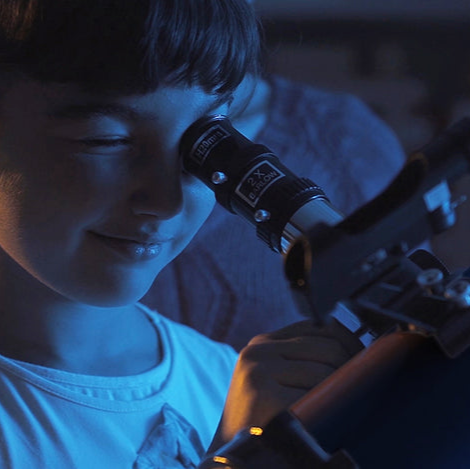
The best telescope is the one that fits what you want to see, where you observe and how much setup you'll put up with. Below are our picks by use and budget. Prices are as of October 2026.
Quick picks
| Best for | Telescope | Aperture | Price |
|---|---|---|---|
| Beginners (best overall) | Explore FirstLight 80mm Telescope | 80mm refractor | $119.99 |
| Kids and budget under $50 | SKY VIEW 70 Refractor | 70mm refractor | $49.99 |
| Beginners under $200 | Sidara Nano 114 Reflector | 114mm reflector | $199.99 |
| App-guided stargazing | StarApp70 with Astronomy App | 70mm refractor | $149.99 |
| Moon and planets | FirstLight 100mm Mak-Cassegrain + Twilight Nano | 100mm Maksutov | $299.99 |
| GoTo (best overall) | Sidara Pro 102 GoTo Refractor | 102mm refractor | $799.99 |
| GoTo on a budget | FirstLight 80mm Go-To Tracker Combo | 80mm refractor | $389.99 |
| Grab-and-go deep sky | 6-inch Tabletop Dobsonian | 152mm reflector | $499.99 |
| Faint galaxies and nebulae | 10-inch Hybrid Truss Tube Dobsonian | 254mm reflector | $899.99 |
| Starting astrophotography | ED80 Essential Triplet with Field Flattener | 80mm ED APO | $779.99 |
| Premium refractor | ED102-FCD100 Air-Spaced Triplet | 102mm ED APO | $1,699.99 |
Best telescope for beginners: Explore FirstLight 80mm
An 80mm refractor is big enough to show Saturn's rings, Jupiter's cloud belts and its moons, and bright clusters and nebulae, and small enough to carry outside in one trip. The FirstLight 80mm comes with a 25mm Plössl eyepiece, a 90° diagonal, a red dot finder and a smartphone adapter, so you can start observing the first night. Refractors need no mirror alignment, which makes them the easiest type to own.
Best telescope under $50: SKY VIEW 70
For a child's first telescope or a gift, the National Geographic SKY VIEW 70 gives a 70mm aperture, a panhandle mount that is simple to aim, and a smartphone adapter for snapping photos of the Moon. Want something even more hands-on? The Galileoscope STEM Kit ($24.99) is a telescope kids build themselves.
Best telescope under $200: Sidara Nano 114
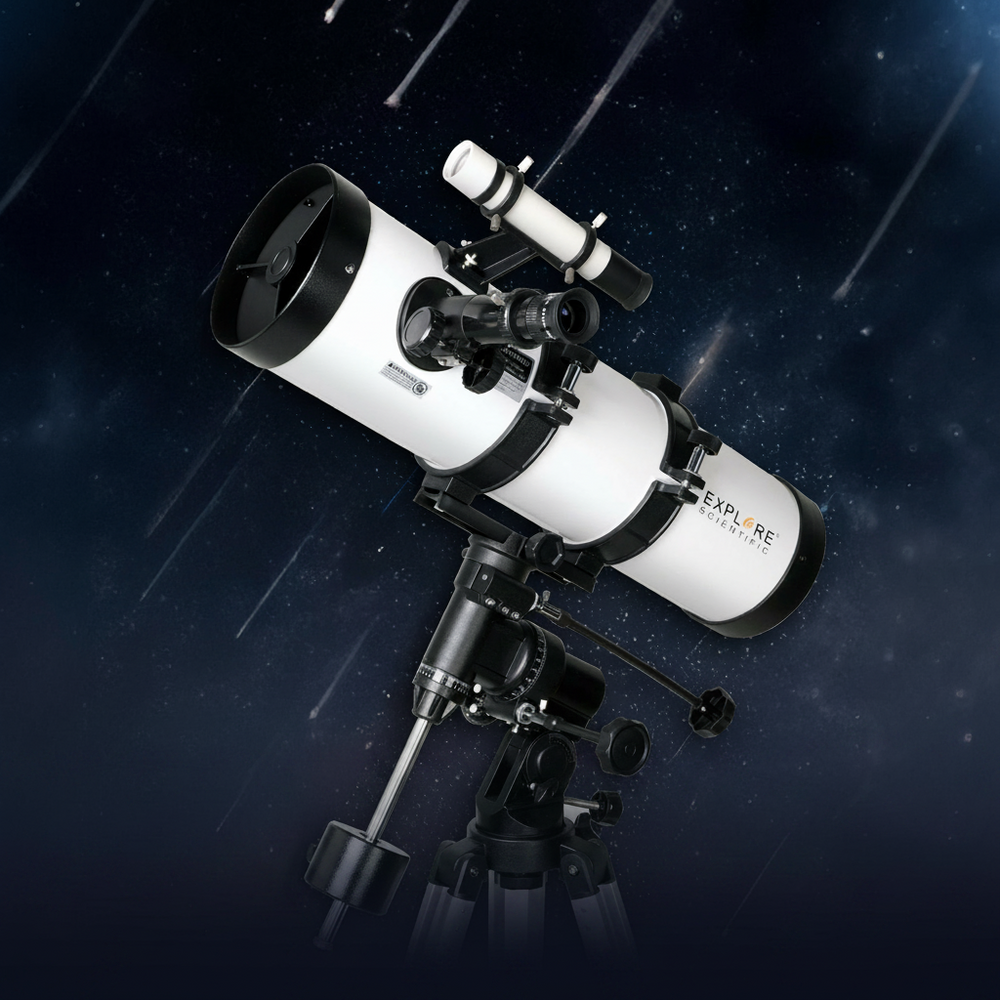
A 114mm Newtonian reflector gathers noticeably more light than the 70mm and 80mm scopes above, which brings more deep-sky objects into view. Its short focal length gives a wide field that makes targets easy to find, and the lightweight Nano mount with slow-motion controls and SkyAssist keeps it simple to aim and easy to carry out on a clear night.
Best app-guided telescope: StarApp70
The StarApp70 pairs a 70mm f/10 refractor with an astronomy app that helps you identify what to look at and where to point. The 700mm focal length is well suited to the Moon and planets, and it also shows bright star clusters and nebulae.
Best telescope for the Moon and planets: FirstLight 100mm Mak-Cassegrain
Planets are small and bright, so they reward long focal length and high contrast more than big aperture. The FirstLight 100mm Mak-Cassegrain has a 1400mm focal length at f/14 in a short, sealed tube, on the lightweight Twilight Nano alt-az mount. It is our top pick if crisp views of Jupiter, Saturn and lunar craters are what you're after.
Best GoTo telescope: Sidara Pro 102
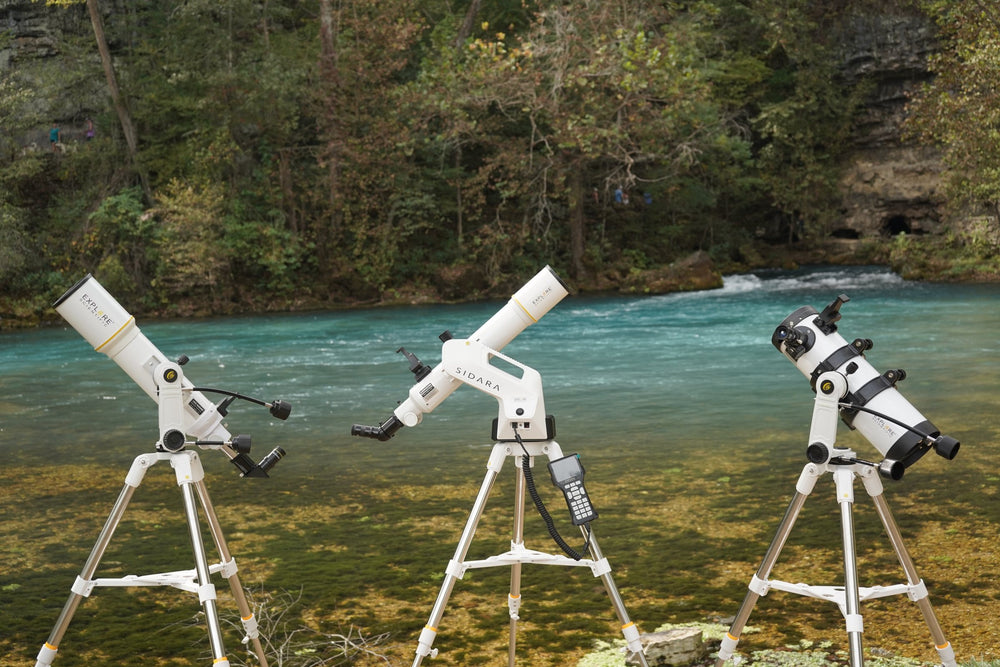
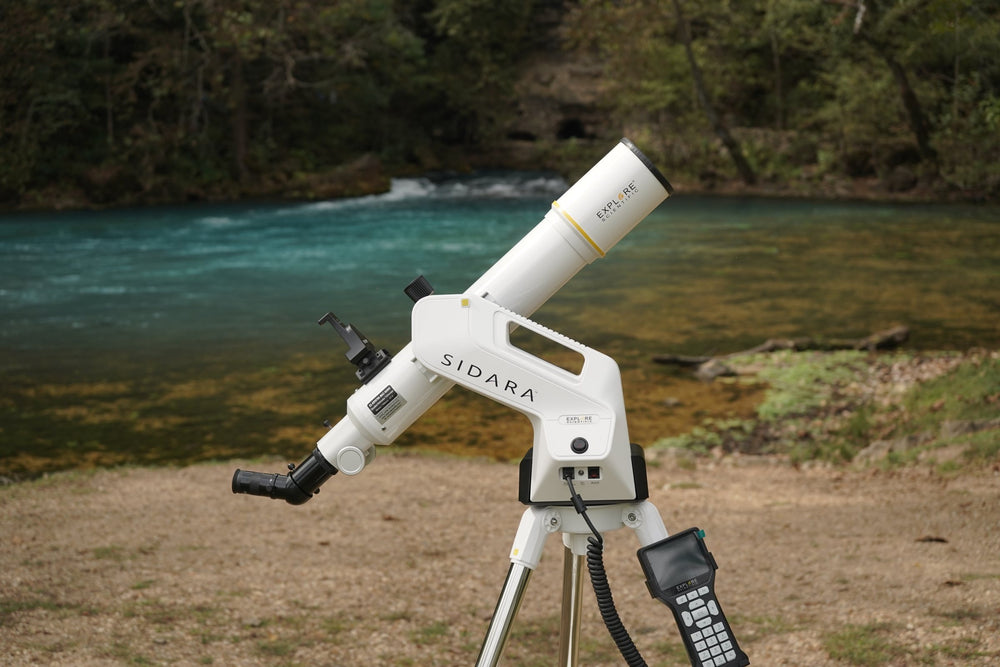
The Sidara Pro 102 pairs a 102mm refractor with a GoTo mount. Pick a target with SkyAssist and the mount finds it and keeps it centered, so you spend the night observing instead of searching. The 102mm aperture gathers enough light for galaxies and nebulae while staying sharp on the Moon and planets. Want something smaller? The Sidara Pro 80 ($599.99) uses an 80mm refractor with the same GoTo mount and is especially good on the Moon and planets.
Best GoTo on a budget: FirstLight 80mm Go-To Tracker Combo
This pairs the FirstLight 80mm refractor with the iEXOS-100 PMC-Eight GoTo tracker. Pick an object on your phone or tablet and the mount finds it and keeps it centered. Tracking also makes it a natural first step into astrophotography.
Best grab-and-go deep sky telescope: 6-inch Tabletop Dobsonian
Aperture is what shows faint objects, and this tabletop Dobsonian puts a 6-inch (152mm) f/5 mirror on a compact mount you set on a table or tailgate. Setup takes almost no time, which means you'll actually use it on a clear night.
Best telescope for galaxies and nebulae: 10-inch Hybrid Truss Tube Dobsonian
A 10-inch (254mm) mirror gathers far more light than smaller scopes, bringing faint galaxies, nebulae and globular clusters into view. The hybrid design keeps a solid upper tube to protect the secondary mirror while breaking down tool-free for transport. For pure visual observing, nothing on this list shows more.
Best telescope for astrophotography: ED80 Essential Triplet
For photographing deep-sky objects, a small apochromatic refractor is the standard starting point. The ED80 Essential uses an air-spaced triplet with HOYA FCD1 ED glass at f/6, which keeps stars sharp and free of color fringing. Mount it on the iEXOS-100-02 tracker ($299.99) for a complete starter imaging rig. See all astrophotography telescopes.
Best premium refractor: ED102-FCD100
The ED102-FCD100 uses genuine HOYA FCD100 extra-low dispersion glass in an air-spaced triplet for excellent color correction, in a size that still travels easily. It is equally at home for high-power visual observing and imaging. Step up to the ED127 Essential ($1,499.99) or the ED152 Carbon Fiber ($3,999.99) for more aperture.
Meet the Sidara series
Sidara is our newest line of complete telescope packages, each with a telescope, mount, tripod, eyepieces and accessories in one box.
- Sidara Nano: compact, lightweight packages on the Nano mount for grab-and-go viewing.
- Sidara Essential: larger-aperture refractor and Newtonian packages for growing observers.
- Sidara Plus: bigger 127mm and 150mm packages for more detail and brighter views.
- Sidara Pro: GoTo packages that find and track objects for you with SkyAssist.
How to choose a telescope
Aperture matters most. The diameter of the main lens or mirror decides how much light a telescope collects and how much detail it can show. Bigger aperture means fainter objects and sharper detail.
Pick the type that fits how you'll use it. Refractors are low maintenance and great for the Moon, planets and photography. Dobsonians give the most aperture per dollar for deep sky viewing. Maksutov-Cassegrains pack a long focal length into a short tube for planets.
The mount is half the telescope. A shaky mount ruins the view. Alt-az mounts are simple up-and-down, side-to-side. GoTo and tracking mounts find and follow objects for you.
Buy for portability. The telescope you can carry out in one trip is the one you'll use most.
Frequently asked questions
What is the best telescope for a beginner?
An 80mm refractor like the Explore FirstLight 80mm ($119.99) is the easiest place to start. It needs no alignment, sets up in minutes and shows the Moon, planets and bright deep-sky objects.
What is the best telescope for viewing planets?
A long focal length telescope with high contrast, like the FirstLight 100mm Mak-Cassegrain (1400mm, f/14), or any quality refractor. Steady air matters as much as the telescope.
What is the best GoTo telescope for beginners?
The Sidara Pro 80 ($599.99) and Sidara Pro 102 ($799.99) are complete GoTo packages: choose a target and the mount points the telescope and tracks it for you. For a lower-cost option, the FirstLight 80mm Go-To Tracker Combo is $389.99.
Is 100x magnification good for a telescope?
Yes. Around 100x is a sweet spot for the Moon and planets in most small telescopes. A practical maximum is about 2x the aperture in millimeters (160x for an 80mm), and less on nights with unsteady air.
What is the best telescope for space photography?
A short apochromatic refractor on a tracking mount. The ED80 Essential on an iEXOS-100-02 tracker is a proven starter setup.
How much does a good telescope cost?
A good first telescope costs $100 to $300. Big-aperture Dobsonians run $500 to $900, and astrophotography setups start around $1,000 with a mount. Kids' and STEM telescopes start at $24.99.
Questions about which telescope is right for you? Contact our team. Free US shipping on orders $49.99+ and 30-day returns.

Leave a comment
All comments are moderated before being published.
This site is protected by hCaptcha and the hCaptcha Privacy Policy and Terms of Service apply.